NEET 2025, Chemistry Q38: General Methods of Preparation of Aliphatic Aldehydes & Ketones
Learn this concept: General Methods of Preparation of Aliphatic Aldehydes & Ketones →
Identify the suitable reagent for the following conversion:

- A
(i) LiAlH, (ii) H/HO
- B
(i) AlH(iBu), (ii) HO
- C
(i) NaBH, (ii) H/HO
- D
H / Pd-BaSO
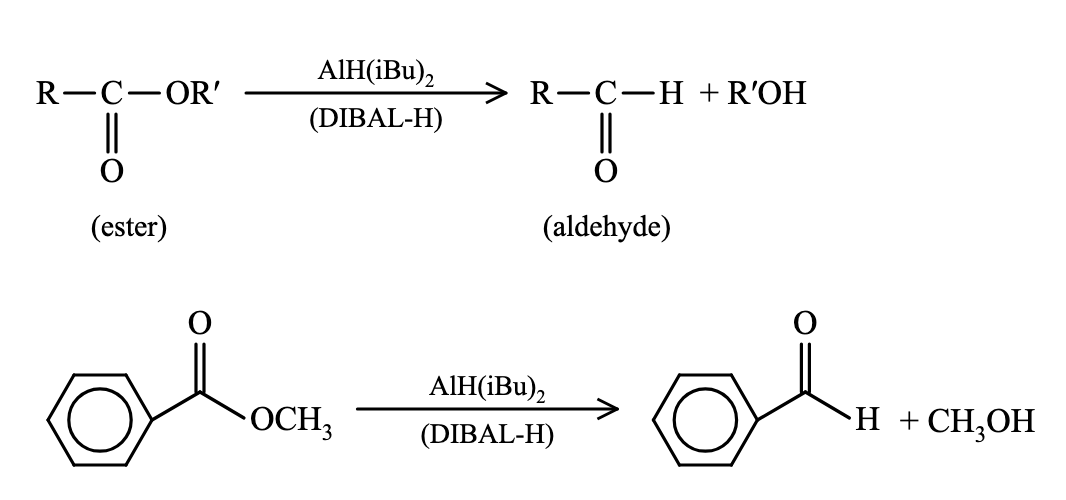
DIBAL-H (diisobutylaluminium hydride, AlH(iBu)) selectively reduces an ester to an aldehyde at low temperature by adding just one hydride and stopping at the tetrahedral intermediate. Workup with water then releases the aldehyde.
LiAlH would reduce the ester all the way to the primary alcohol (PhCHOH), not the aldehyde.
NaBH is too mild to reduce an ester under these conditions, so the ester is left as it is and no aldehyde forms.
H/Pd-BaSO (Rosenmund) reduces acid chlorides, not esters, to aldehydes.
The correct reagent is DIBAL-H followed by aqueous workup.
Concept behind this question
General Methods of Preparation of Aliphatic Aldehydes & KetonesNotes, formulas and examples →Practice more Chemistry
Concept-wise practice with instant solutions on Fundamenthol.
Start practicing →