JEE Main 2026 Jan 21 Shift 1, Chemistry Q4: Mechanism of Some Important Reactions of Alkenes
Learn this concept: Mechanism of Some Important Reactions of Alkenes →
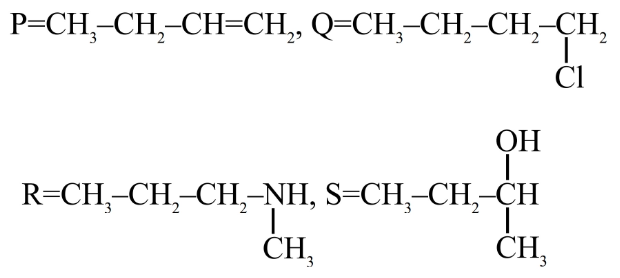
A hydrocarbon 'P' () on reaction with gives an optically active compound 'Q' () which on reaction with one mole of ammonia gives compound 'R' (). 'R' on diazotization followed by hydrolysis gives 'S'. Identify P, Q, R and S.
- A
- B
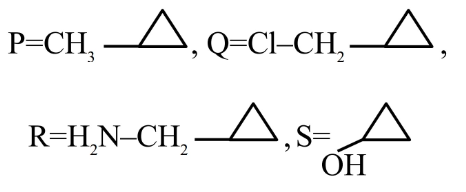
- C
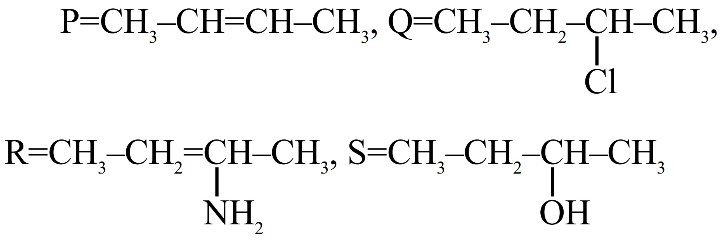
- D
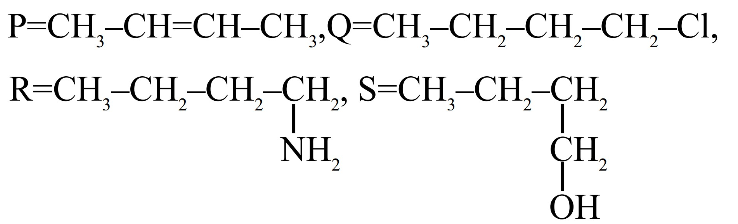
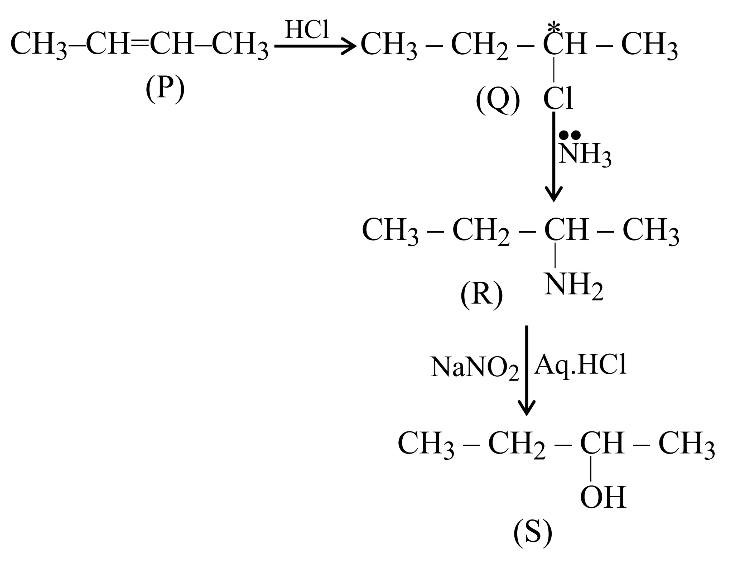
- P, CH, adds HCl to give Q, CHCl, which is optically active
- Q with one mole of NH gives R, CHN
- R is diazotised, then hydrolysed, to give S
Steps
Find Q, then P
Of the straight-chain CHCl, only 2-chlorobutane, CHCHCHClCH, has a chiral carbon (H, Cl, CH and CH on one carbon). So Q is 2-chlorobutane, a chiral compound. But-2-ene, CHCH=CHCH, gives it with HCl: the alkene is symmetric, so either carbon of the C=C can take the Cl. So P is but-2-ene.
Q to R
NH replaces the Cl. With one mole of NH the main product is the 1° amine: R is butan-2-amine, CHCHCH(NH)CH, which is CHN.
R to S
Nitrous acid (NaNO and HCl) turns a 1° aliphatic amine into a diazonium salt that is not stable. It loses N, and water puts OH where the NH was. S is butan-2-ol, CHCHCH(OH)CH.
Concept behind this question
Mechanism of Some Important Reactions of AlkenesNotes, formulas and examples →More previous year questions on Mechanism of Some Important Reactions of Alkenes
Practice more Chemistry
Concept-wise practice with instant solutions on Fundamenthol.
Start practicing →