JEE Main 2025 Jan 23 Shift 2, Chemistry Q11: Mechanism of Some Important Reactions of Alkenes
Learn this concept: Mechanism of Some Important Reactions of Alkenes →
Match List - I with List - II.
| List - I (Isomers of CH) | List - II (Ozonolysis product) | ||
|---|---|---|---|
| (A) | 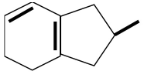 | (I) | 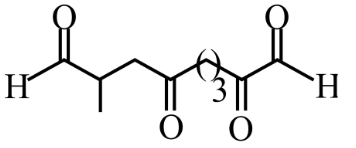 |
| (B) | 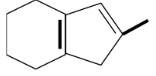 | (II) | 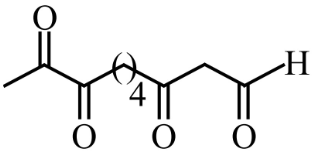 |
| (C) | 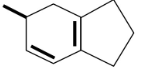 | (III) | 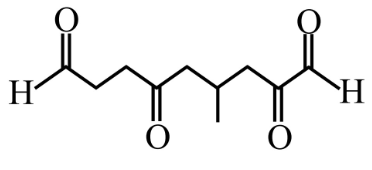 |
| (D) | 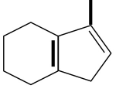 | (IV) | 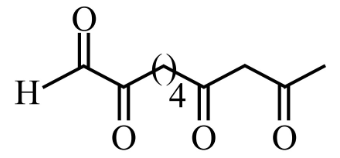 |
Choose the correct answer from the options given below :
- A
(A)-(II), (B)-(III), (C)-(I), (D)-(IV)
- B
(A)-(III), (B)-(IV), (C)-(I), (D)-(II)
- C
(A)-(III), (B)-(II), (C)-(I), (D)-(IV)
- D
(A)-(I), (B)-(IV), (C)-(III), (D)-(II)
- Four bicyclic CH dienes (indane skeleton, one methyl group), each to be matched with its ozonolysis product.
Steps
Cleave the diene in (A)
(A): the double bonds are C3aC7a and C6C7, with CH on C2. C6 and C7 become CHO groups. Tracing the chain from C7:
(A) matches product (III)
The chain from (A) is product (III).
Cleave the diene in (B)
(B): the double bonds are C3aC7a and C2C3, with CH on C2. C2 becomes a methyl ketone and C3 becomes CHO. This is product (IV).
Cleave the diene in (C)
(C): the double bonds are C3aC7a and C4C5, with CH on C6. C4 and C5 become CHO groups. This is product (I).
Cleave the diene in (D)
(D): the double bonds are C3aC7a and C2C3, with CH on C3. C3 becomes a methyl ketone next to the C3a ketone, and C2 becomes CHO. This is product (II).
Write the final matching
The matching is therefore A-III, B-IV, C-I, D-II.
Concept behind this question
Mechanism of Some Important Reactions of AlkenesNotes, formulas and examples →More previous year questions on Mechanism of Some Important Reactions of Alkenes
Practice more Chemistry
Concept-wise practice with instant solutions on Fundamenthol.
Start practicing →