JEE Advanced 2024 Paper 1, Chemistry Section 4 Q4: Preparation of Phenol
Learn this concept: Preparation of Phenol →
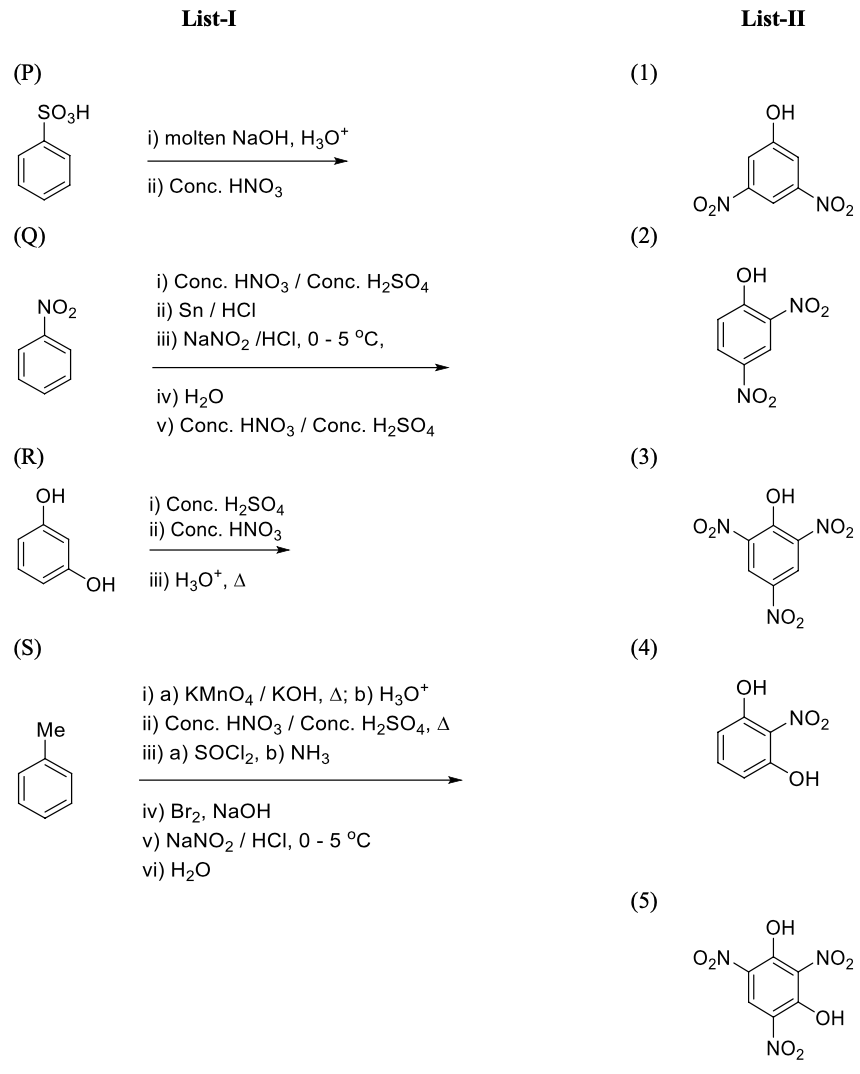
List-I contains various reaction sequences and List-II contains different phenolic compounds. Match each entry in List-I with the appropriate entry in List-II and choose the correct option.
- A
P-2, Q-3, R-4, S-5
- B
P-2, Q-3, R-5, S-1
- C
P-3, Q-5, R-4, S-1
- D
P-3, Q-2, R-5, S-4
- Four reaction sequences (P to S) that each end in a phenol
- Five nitrophenols in List-II (1 to 5) to match them with
Steps
P: picric acid forms
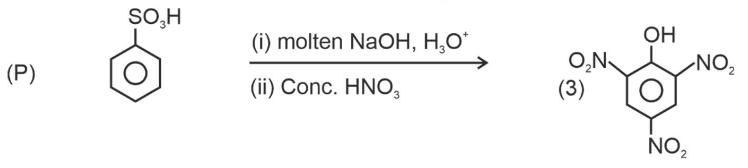
Fusion with molten NaOH followed by acidification replaces by , giving phenol. Phenol is strongly activated, so conc. nitrates all three ortho/para positions. The product is 2,4,6-trinitrophenol (picric acid). P → 3.
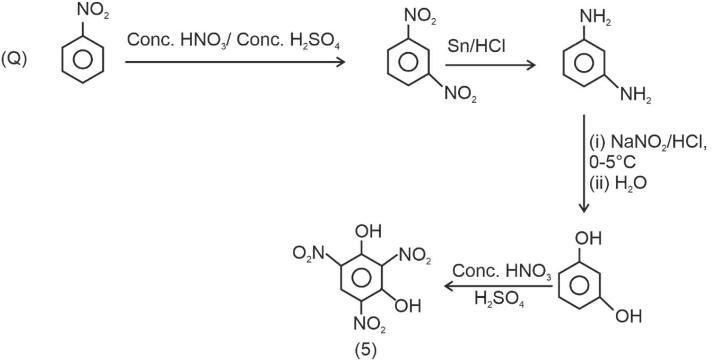
Q: styphnic acid forms
Nitration of nitrobenzene gives m-dinitrobenzene. Sn/HCl reduces it to m-phenylenediamine. Double diazotisation followed by warming with water gives resorcinol. The two groups activate positions 2, 4 and 6, so conc. / gives 2,4,6-trinitroresorcinol (styphnic acid). Q → 5.
R: sulfonic acid blocks positions
Conc. sulfonates resorcinol at the open activated positions 4 and 6. Heating with removes both groups. The product is 2-nitroresorcinol (2-nitrobenzene-1,3-diol). R → 4.
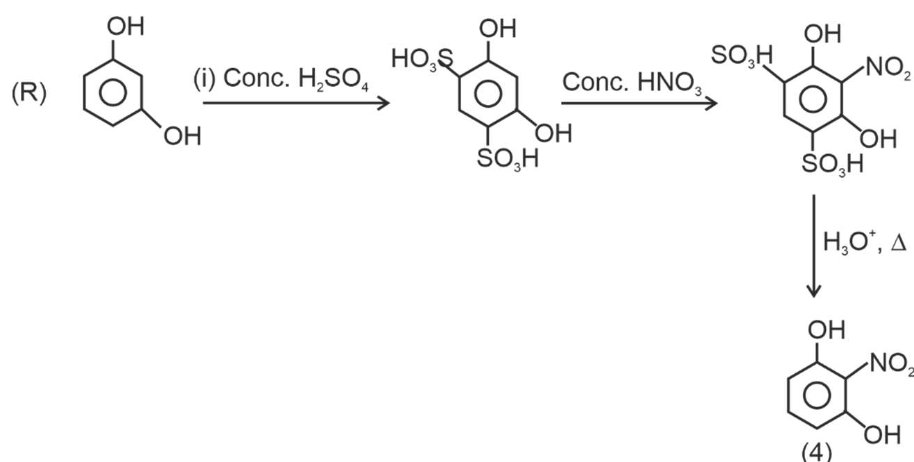 Key stepNitration then occurs at the only activated position left, C-2, which lies between the two groups.
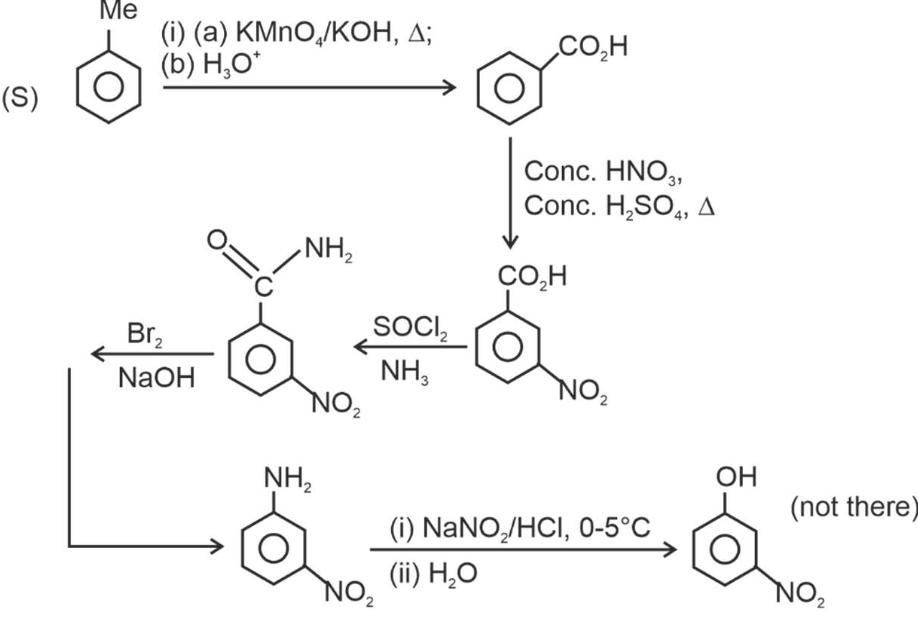
S: 3,5-dinitrophenol forms
Hot alkaline followed by acid oxidises toluene to benzoic acid. directs meta, and nitration with conc. / on heating introduces two nitro groups, giving 3,5-dinitrobenzoic acid. and then convert it to 3,5-dinitrobenzamide. /NaOH (Hofmann degradation) gives 3,5-dinitroaniline. Diazotisation and hydrolysis with water then give 3,5-dinitrophenol. S → 1.
Concept behind this question
Preparation of PhenolNotes, formulas and examples →More previous year questions on Preparation of Phenol
Practice more Chemistry Section 4
Concept-wise practice with instant solutions on Fundamenthol.
Start practicing →